

Exercitation ullamco laboris nis aliquip sed conseqrure dolorn repreh deris ptate velit ecepteur duis.

Exercitation ullamco laboris nis aliquip sed conseqrure dolorn repreh deris ptate velit ecepteur duis.

 blog
blogMachinery and Equipment Transportation in Baddi: What to Expect
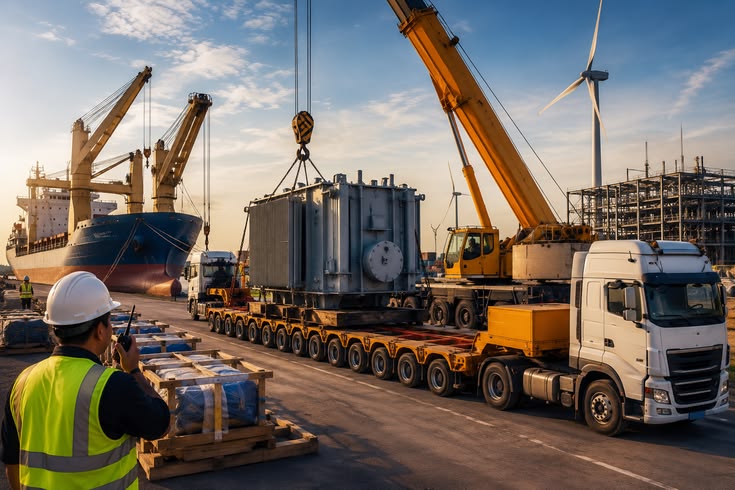
Moving machinery is not the same as moving a few cartons from one office to another. Industrial equipment can be heavy, oversized, delicate, expensive or all four at once. One wrong move can turn a routine transportation job into a very expensive headache.
For businesses operating in Baddi, this makes proper planning especially important. Baddi forms part of the Baddi-Barotiwala-Nalagarh (BBN) industrial belt, a major industrial area in Himachal Pradesh with manufacturing activity across sectors including pharmaceuticals, engineering, metals, plastics, electrical and electronics. Government planning documents also identify Baddi, Barotiwala and Nalagarh as important industrial areas.
So, what should a business expect when arranging machinery and equipment transportation in Baddi? The simple answer is: more planning, better equipment and careful coordination from pickup to final placement.
Industrial machinery often cannot be treated like ordinary commercial cargo.
A machine may have unusual dimensions, a high centre of gravity, fragile components or specific loading requirements. Some equipment may also need protection against moisture, dust, vibration or impact during transit.
Before transportation begins, the transporter should understand what is being moved.
This usually means checking:
This planning stage may sound less exciting than watching a truck arrive, but it is where many transportation problems can be prevented.
Baddi is not simply a residential town with a few factories around it. It is part of a larger industrial region covering Baddi, Barotiwala and Nalagarh.
The Baddi-Barotiwala-Nalagarh Development Authority (BBNDA) describes the area as a major planning region with industrial and infrastructure development needs. Its official information also highlights the importance of traffic and transportation planning because of industrialisation and urban growth.
The Himachal Pradesh Town and Country Planning Department also maintains an approved development plan for the Baddi-Barotiwala-Nalagarh area.
For machinery transportation, this matters because industrial movement requires coordination with the actual site conditions. A suitable truck is only one part of the solution. The transporter also needs to consider the route, access to the facility and the practical requirements of loading and unloading.
In other words, machinery transportation in Baddi starts before the vehicle starts moving.
A professional transporter should first understand the machinery and the locations involved.
For larger equipment, a physical inspection can be useful. It allows the team to check the machine, loading area, access points and possible handling challenges.
Important questions include:
How heavy is the equipment?
Weight affects vehicle selection and handling requirements.
How large is it?
Length, width and height can influence the transportation method and route.
Can it be lifted normally?
Some machines require specialised lifting or loading equipment.
Can the machine be dismantled?
In some cases, separating suitable components can make transportation easier. This decision should come from the machine manufacturer, engineer or qualified technical team rather than being made casually by a transporter.
Where will the equipment be delivered?
The final destination matters just as much as the pickup point. A truck may reach the industrial premises, but the real challenge can begin when the equipment has to enter a particular building or production area.
There is no universal truck for every type of machinery.
The transporter should select a vehicle according to the machine’s weight, dimensions, loading method and transportation requirements.
Depending on the shipment, the solution may involve a suitable open-body vehicle, platform vehicle or another specialised arrangement.
The important point is not to choose a vehicle simply because it is available.
A machine that requires a particular loading arrangement should travel on a vehicle that can safely accommodate it.
This is also where accurate measurements become important. Guessing dimensions is a poor strategy when a piece of industrial equipment costs far more than the truck carrying it.
Loading is one of the most important stages of machinery transportation.
The machine needs to be positioned correctly and secured so that it does not shift unnecessarily during transit.
The exact method depends on the type of equipment. Appropriate restraints, protective material and handling equipment may be required.
For sensitive machinery, additional protection may also be necessary to reduce exposure to dust, moisture or physical impact.
The loading team should also follow the manufacturer’s handling instructions wherever they are available.
A transporter should never improvise with expensive industrial equipment just because “it looks strong enough.”
Documentation is another important part of commercial goods transportation in India.
The official GST e-Way Bill system states that an e-way bill is required in prescribed cases for consignments exceeding the specified value threshold, including consignments valued above ₹50,000 under the applicable rules. The system also requires relevant invoice, bill of supply or delivery challan information and transportation details in applicable cases.
The exact documentation depends on the nature of the movement and applicable GST rules.
For road transportation, vehicle details are also relevant to completing the applicable e-way bill requirements. The official e-way bill FAQ explains that Part-B generally needs to be completed for movement, subject to specified exceptions.
Because tax and transportation rules can change, businesses should verify the current requirements for their specific shipment rather than relying on an old checklist.
A good transporter should coordinate with the consignor or consignee so that the required documents are ready before the vehicle leaves.
Heavy or oversized machinery may require more route planning than ordinary cargo.
The shortest route is not automatically the best route.
The transporter may need to consider road conditions, available access, turns, bridges, local restrictions and the dimensions of the vehicle and load.
Baddi’s industrial belt includes Baddi, Barotiwala and Nalagarh, and government road documents identify important road connections serving the region.
For a normal shipment, route planning may be relatively straightforward. For larger equipment, however, the transporter should assess the practical route before dispatch.
That is particularly important when the load has unusual dimensions.
Getting machinery onto the truck is only half the job.
The equipment must eventually come off the truck and reach its intended location.
Depending on the machine and site, unloading may require lifting equipment or other specialised handling arrangements.
The transporter and customer should agree in advance about who will arrange the required equipment and manpower.
This avoids the classic industrial transportation surprise: the truck arrives on time, everyone is ready, and then somebody asks, “Great. Now how do we get this thing inside?”
A little planning beforehand can save a lot of waiting later.
Before booking machinery transportation in Baddi, ask clear questions.
Experience with ordinary household shifting does not automatically mean experience with industrial equipment.
The answer should be based on the machine’s dimensions, weight and handling requirements.
Get this clarified before the shipment starts.
The transporter should explain the general securing and protection approach appropriate for the equipment.
Confirm the applicable invoice, delivery challan, e-way bill and other documents before dispatch.
For industrial businesses, delays can affect installation, production schedules and manpower planning. Clear communication is therefore important.
For large machinery, the transporter should understand both pickup and delivery conditions rather than planning only from a map.
The customer can make machinery transportation considerably easier by preparing in advance.
Keep the machine’s basic specifications available, including dimensions and weight where known.
Clear the loading area and make sure the transporter can access the premises.
Inform the transporter about gates, narrow approaches, ramps, stairs or other site limitations.
Keep relevant commercial and transportation documents ready.
If the machine requires technical disconnection, dismantling or reassembly, coordinate with the appropriate technical personnel.
Most importantly, do not leave everything until the truck arrives.
Industrial transportation works best when the customer, transporter and site team know their responsibilities before loading begins.
The purpose of professional machinery transportation is not simply to move equipment from Point A to Point B.
The goal is to move it safely, legally and in a controlled manner while reducing avoidable delays and handling risks.
That requires planning across several stages:
Inspection → Vehicle Selection → Documentation → Loading → Securing → Transit → Unloading → Delivery
Each stage affects the next one.
A mistake during measurement can cause a vehicle problem. A poor loading plan can cause delays. Missing documentation can interrupt movement. Poor coordination at the destination can leave expensive equipment sitting on a truck.
Good transportation therefore depends on the whole process, not just the driver.
Baddi’s role as part of the Baddi-Barotiwala-Nalagarh industrial belt makes reliable industrial transportation an important requirement for businesses operating in the region. Official government sources describe the area as a significant industrial centre and recognise the need for proper infrastructure and transportation planning.
When arranging machinery and equipment transportation in Baddi, businesses should focus on planning rather than simply searching for the cheapest available vehicle.
Start with accurate machine details. Choose transportation equipment according to the actual load. Prepare the required documentation. Plan the route. Confirm loading and unloading responsibilities. Then keep communication open throughout the movement.
Heavy machinery may not be in a hurry to explain its problems, but your production schedule certainly will.
A properly planned transportation process helps keep the shipment organised from the factory floor to its final destination.

