


Exim Cargo Services in India: A Complete Guide for Businesses
Shipping a container of goods out of India sounds simple until you actually try it. Suddenly there’s an IEC code to arrange, a customs officer to satisfy, a shipping line to book, and a truck that needs to reach the port on time. This is where Exim Cargo Services step in, and honestly, they save businesses from a fair bit of grey hair.
In this guide, we’ll break down what Exim Cargo Services actually mean, how the process works, which documents you need, and how to pick a partner who won’t leave your cargo stuck at a port somewhere.
What Are Exim Cargo Services?
“Exim” is simply short for Export-Import. Exim Cargo Services cover everything a business needs to move goods across international borders — packing, transportation, customs clearance, documentation, and final delivery.
Think of it as a bridge between a factory in India and a buyer sitting in Germany or Dubai. The goods have to travel that bridge safely, legally, and on time. Exim cargo providers build and manage that bridge, so exporters and importers don’t have to become customs experts overnight.
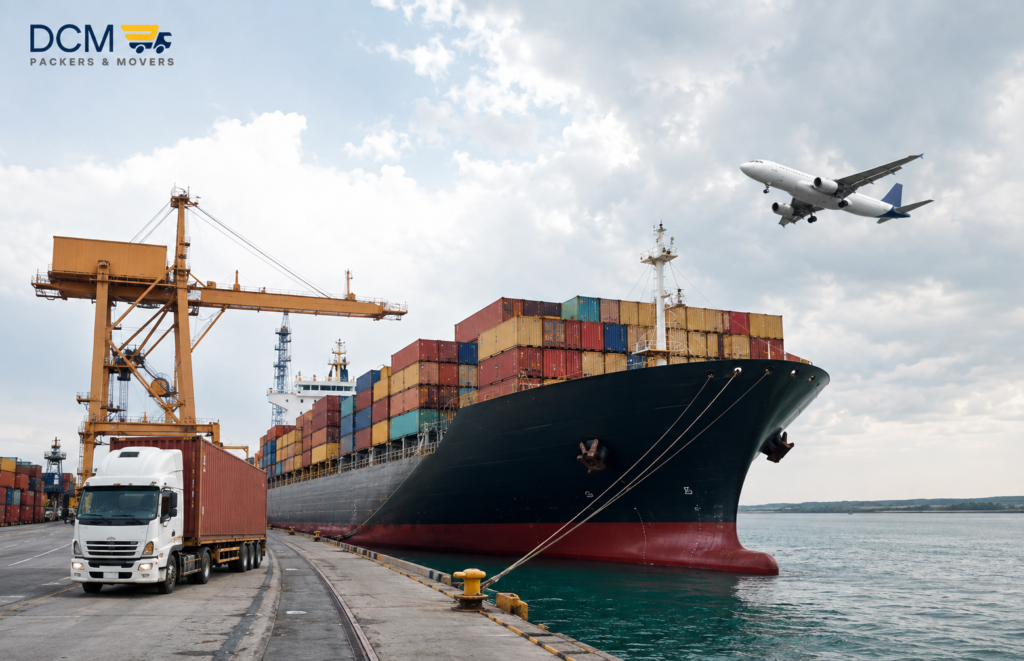
These services typically apply to both sea cargo and air cargo, and they involve multiple stakeholders — the exporter, the freight forwarder, shipping lines or airlines, customs authorities, and the final buyer.
Why Exim Cargo Services Matter for Indian Businesses
India’s trade volumes have grown steadily over the past decade, and more small and medium businesses are exporting directly instead of relying only on large trading houses. That’s a good thing for the economy, but it also means more first-time exporters are running into paperwork they’ve never seen before.
A single mistake in a shipping bill or an incomplete packing list can hold up a shipment at port for days. That delay isn’t just annoying — it costs money in demurrage charges and can damage a business relationship with an overseas buyer who was expecting the goods on schedule.
Professional Exim cargo handling reduces this risk considerably. It also gives businesses access to established freight networks instead of building relationships with shipping lines and customs brokers from scratch.
How Exim Cargo Services Work: Step by Step
The process isn’t as mysterious as it looks. Here’s roughly how a shipment moves from a warehouse in India to a port and onward overseas.
1. Documentation and Compliance Check
Before anything moves, the exporter needs an Importer Exporter Code (IEC). This is a mandatory 10-digit code issued by the Directorate General of Foreign Trade (DGFT) under the Ministry of Commerce and Industry. Without it, customs simply won’t clear the shipment. The good news is that IEC registration is a one-time process with lifetime validity, so there’s no annual renewal headache.
2. Packing for International Transit
Export packing is a different animal from a household move. Goods need to survive weeks at sea, changes in humidity, and rough handling at multiple transfer points. This usually means export-grade wooden crates, fumigated pallets (as required under ISPM-15 standards for wood packaging), lashing, and moisture-proof wrapping.
3. Inland Transportation to Port or Airport
The cargo then travels by road or rail to the nearest port, container freight station (CFS), or airport. Timing matters here, since ships and flights work on fixed schedules, not on “we’ll get there when we get there.”
4. Customs Clearance
This is the step that scares most first-time exporters. In practice, most of it now happens electronically through ICEGATE, the Indian Customs EDI Gateway managed by the Central Board of Indirect Taxes and Customs (CBIC). Shipping bills, bills of entry, and duty payments are filed online, which has cut down paperwork and clearance time significantly compared to the old manual system.
5. Loading and Freight Movement
Once cleared, cargo is loaded onto a vessel or aircraft. For sea shipments, businesses choose between FCL (Full Container Load) for larger volumes and LCL (Less than Container Load) when goods don’t fill an entire container.
6. Delivery and Final-Mile Handling
On arrival, the cycle reverses — customs clearance at the destination country, unloading, and final delivery to the buyer’s location.
Documents You’ll Typically Need
Every Exim shipment tends to involve a similar paper trail, even if the exact requirements vary by product and destination country:
- Importer Exporter Code (IEC)
- Commercial invoice and packing list
- Bill of Lading (sea) or Airway Bill (air)
- Shipping Bill (filed via ICEGATE)
- Certificate of Origin, where applicable
- Insurance documents
Getting even one of these wrong can mean a shipment sitting at the port instead of on the water. This is precisely why most businesses hand this part over to an experienced cargo partner rather than handling it in-house.
Key Ports and Gateways for Exim Cargo in India
India’s Exim trade runs largely through a handful of major gateways. Mundra Port in Gujarat is currently the country’s largest port by cargo tonnage, handling roughly 155 million tonnes of cargo and close to a third of India’s total container traffic. Jawaharlal Nehru Port (JNPT), also known as Nhava Sheva, near Mumbai, is the country’s second-largest container port and remains the primary gateway for containerised trade on the west coast.
Air cargo, meanwhile, moves mainly through Delhi, Mumbai, Chennai, and Bengaluru airports, which handle the bulk of India’s international air freight.
Knowing which gateway suits a particular shipment — based on product type, destination, and urgency — is part of what a good Exim cargo partner brings to the table.
Common Challenges in Exim Cargo (And Why a Little Humour Helps)
Anyone who has dealt with international shipping knows it rarely goes exactly to plan. A vessel gets delayed, a customs officer asks for one more document nobody thought of, or a container gets rolled to the next sailing. It’s a bit like Indian weddings — meticulously planned, yet something unexpected always shows up at the last minute.
The businesses that handle this well aren’t the ones with zero problems. They’re the ones with a logistics partner experienced enough to solve problems quickly instead of panicking about them.
Common hiccups include incomplete HS code classification, mismatched invoice values, container shortages during peak season, and last-mile delays at the destination country. Each of these is manageable with the right documentation and a partner who has seen it before.
How to Choose the Right Exim Cargo Partner
A few practical things to check before signing up with any Exim cargo provider:
- Experience with your product category — chemicals, machinery, textiles, and perishables all have different handling and documentation needs.
- Port and airport network coverage — a partner with tie-ups across multiple gateways gives more routing flexibility.
- Transparent pricing — freight rates fluctuate, so clarity on what’s included (customs, insurance, inland transport) avoids surprises later.
- Insurance support — goods insurance protects against loss or damage during transit, which matters more on international routes than domestic ones.
- Track record and certifications — ISO certification and years of operational history are reasonable indicators of process discipline.
DCM Packers and Movers: Exim Cargo Services
DCM Packers and Movers offers Exim Cargo Services as part of its commercial moving and supply chain solutions, alongside warehousing, ODC (Over Dimensional Cargo) transportation, and logistics support. With decades of experience in the packing and moving industry and a presence across multiple Indian states, DCM works with B2B clients who need dependable handling for both domestic supply chains and cross-border cargo movement.
For businesses that would rather focus on their core operations than chase customs paperwork, working with an established Exim cargo team makes the whole process considerably less stressful.
Frequently Asked Questions
1. What does Exim Cargo mean?
Exim Cargo refers to goods that are being exported from or imported into a country, along with the logistics, documentation, and customs processes involved in moving them.
2. Is an IEC code mandatory for Exim cargo shipments?
Yes. An Importer Exporter Code from the DGFT is mandatory for any commercial import or export shipment from India, and it doesn’t require renewal once issued.
3. What is the difference between FCL and LCL shipments?
FCL means a business books an entire container for its cargo. LCL means the cargo shares container space with shipments from other exporters, which is useful for smaller volumes.
4. How long does customs clearance take in India?
It varies by product, documentation accuracy, and port congestion, but electronic filing through ICEGATE has made the process considerably faster than the older manual system.
5. Do Exim cargo services include insurance?
Most providers offer goods insurance as an add-on, and it’s strongly recommended for international shipments given the number of handling points involved.
6. Which ports handle most of India’s Exim cargo?
Mundra Port and Jawaharlal Nehru Port (JNPT/Nhava Sheva) handle the largest share of India’s containerised sea cargo, while Delhi and Mumbai airports lead on air freight.

Contact Info
- Dcm Packers Movers
- +91 9779593495
- +91 8005573532
- dcmpackermover@gmail.com
- Shop No, 2254/H, 2nd Floor, Pipliwala Town, Near Fouji Dhaba, Manimajra, Chandigarh - 160101