

Exercitation ullamco laboris nis aliquip sed conseqrure dolorn repreh deris ptate velit ecepteur duis.

Exercitation ullamco laboris nis aliquip sed conseqrure dolorn repreh deris ptate velit ecepteur duis.

 blog
blogHow to Pack and Transport a Motorcycle for a Move: A Complete Step-by-Step Guide
Moving to a new home comes with a long checklist. If you own a motorcycle, that checklist gets a little more interesting.
Unlike furniture or household items, a motorcycle needs extra care during transportation. One loose strap or skipped preparation step can lead to scratches, fluid leaks, or expensive repairs. The good news? With the right approach, you can move your bike safely without unnecessary stress.
In this guide, you’ll learn how to pack and transport a motorcycle for a move, whether you’re moving across town or across the country. We’ll cover preparation, packing, loading, transportation options, and common mistakes to avoid.
A motorcycle isn’t just another possession. It contains sensitive mechanical parts, painted surfaces, electrical components, and fluids that all require protection during transit.
Proper packing helps you:
According to the Federal Motor Carrier Safety Administration (FMCSA), properly securing cargo during transportation is essential for road safety and preventing damage during transit.
Before wrapping or loading anything, spend some time preparing the bike.
Wash off dirt, mud, and grease.
A clean motorcycle makes it much easier to spot existing scratches or dents. Taking photos after cleaning also gives you a clear record of its condition before the move.
Check for:
Take clear photos from multiple angles. These images can be helpful if you’re using a motorcycle transport company.
Many professional transport companies recommend keeping the fuel tank only about one-quarter full. This reduces weight while still allowing the motorcycle to be moved if necessary.
Also inspect:
If you notice leaks, fix them before transportation.
Accessories can become damaged or fall off during transport.
Consider removing:
Pack these items separately using bubble wrap and sturdy boxes.
Now it’s time to add protection.
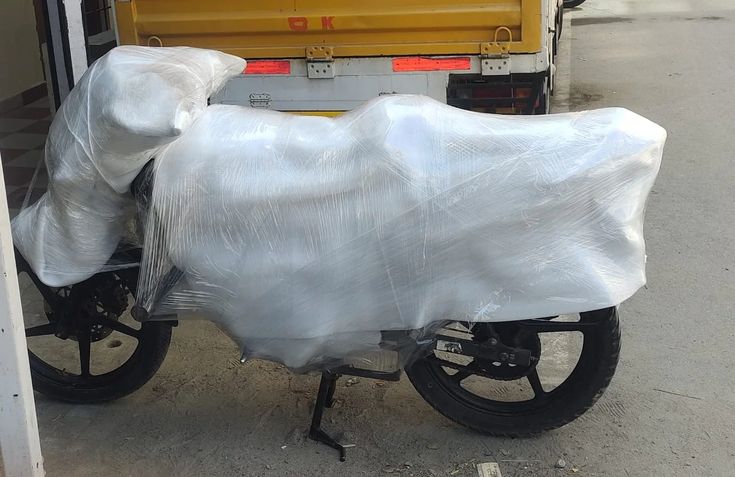
Use soft moving blankets or foam padding to cover:
Secure the padding with stretch wrap or painter’s tape. Avoid using regular adhesive tape directly on painted surfaces.
There isn’t one perfect transportation option for everyone.
Your choice depends on distance, budget, and convenience.
An open trailer is affordable and works well for shorter moves.
However, your motorcycle remains exposed to:
An enclosed trailer offers much better protection.
This option is ideal for:
Although it usually costs more, it significantly reduces the risk of weather-related damage.
If you’re moving across states or don’t want to handle transportation yourself, hiring professional motorcycle movers can save time and reduce stress.
Reputable transport companies use specialized equipment designed specifically for motorcycles.
When selecting a transporter, verify that the company is licensed and insured. In the United States, you can check registration information through the Federal Motor Carrier Safety Administration (FMCSA).
This step is the most important.
Improper tie-down techniques can cause the motorcycle to shift during transport.
Use heavy-duty ratchet straps designed for vehicle transportation.
Avoid using worn or damaged straps.
Most experts recommend securing the motorcycle at four points:
This creates stability during braking, turning, and acceleration.
Do not fully compress the suspension.
A small amount of compression helps keep the straps tight while preventing unnecessary stress on suspension components.
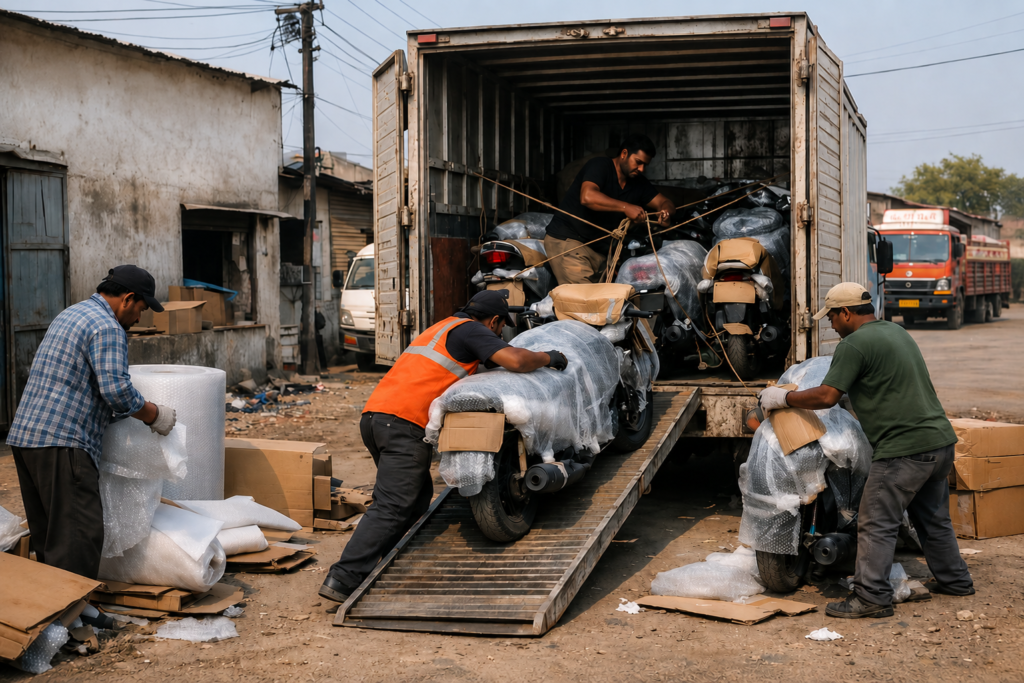
Loading accidents are more common than transportation accidents.
Follow these simple steps:
Once positioned, engage first gear after securing the bike to help prevent rolling.
This depends on the transportation method.
For most domestic moves, transport companies recommend keeping the fuel level low rather than completely empty.
Always follow the specific instructions provided by your transport company.
If you’re moving more than one motorcycle:
Each bike should have its own tie-down system.
Even experienced riders make these mistakes during a move.
Skipping Photos
Without photos, it’s difficult to document the motorcycle’s condition before transport.
Using Cheap Straps
Low-quality straps can loosen or fail during the journey.
Forgetting Tire Pressure
Proper tire pressure improves stability while loading and unloading.
Leaving Valuables Attached
Remove cameras, documents, keys, helmets, and electronics before transportation.
Ignoring Weather
If you’re using an open trailer, monitor the weather forecast. Heavy rain or hail can increase the risk of cosmetic damage.
Professional motorcycle transport makes sense if:
Professional movers typically have the equipment and experience needed to transport motorcycles safely.
Before booking, ask about:
Reading customer reviews and verifying credentials can also help you choose a reliable service.
Before your motorcycle leaves, make sure you’ve completed this checklist:
A simple checklist can prevent costly mistakes later.
Learning how to pack and transport a motorcycle for a move isn’t difficult, but it does require careful preparation.
Cleaning the motorcycle, removing accessories, protecting vulnerable parts, and securing it correctly all play an important role in preventing damage during transit. Whether you transport the bike yourself or hire professionals, taking the time to prepare properly will help ensure your motorcycle arrives in the same condition it left.
After all, your motorcycle has carried you through countless journeys. It deserves a safe ride to its next destination too.

