

Transportation Services: Trusted Car & Bike Movers in India
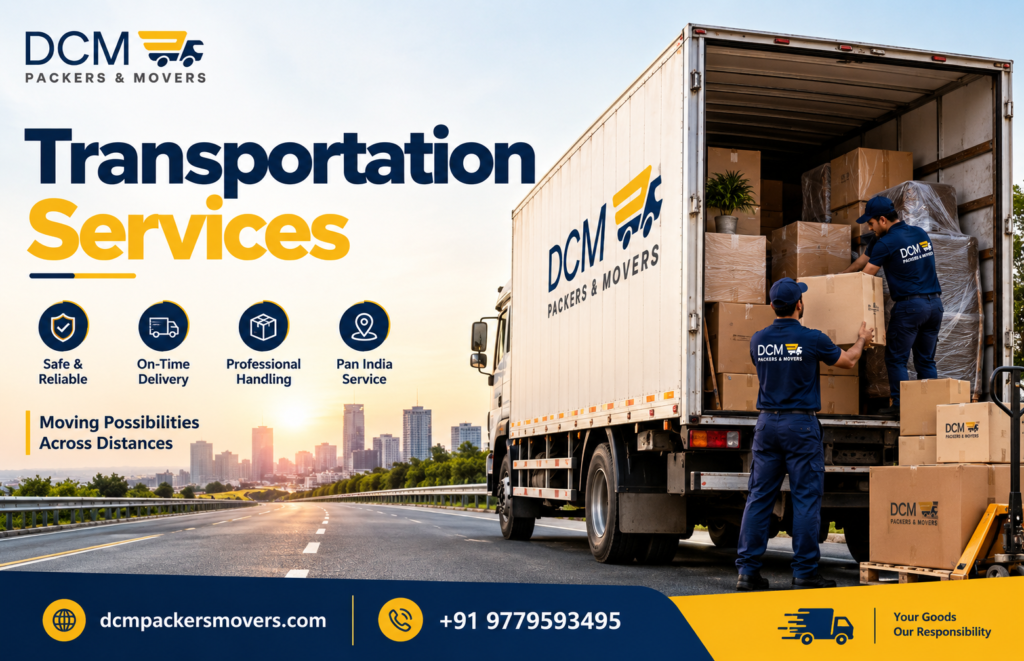
Shifting to a new city is exciting. Then you remember you also have to move your car or bike, and suddenly it feels less like an adventure and more like a logistics exam nobody prepared you for. Where do you even start? Do you drive it yourself for 1,500 km and arrive looking like you survived a rally race? Or do you trust professional transportation services to do the heavy lifting?
For most people, the second option wins. DCM Packers and Movers handle the loading, the paperwork, and the worry, so you can focus on settling into your new home instead of babysitting a steering wheel for two days straight.
This guide breaks down how vehicle transportation actually works in India, what documents you need, how pricing works, and what to check before you hand over your keys to anyone.
Why Professional Vehicle Transportation Makes Sense
Self-driving a vehicle across states sounds simple until you factor in fuel costs, toll charges, driver fatigue, and the small matter of unfamiliar highways. Add night halts and hotel stays, and a “budget-friendly” self-drive move often costs more than hiring a mover.
Trusted car and bike movers use dedicated carriers designed to hold vehicles securely in place during transit. The vehicle does not touch the road for the entire journey between pickup and delivery, which cuts down wear, tyre damage, and odometer mileage considerably.
There is also the safety angle. A relocation company that has handled thousands of vehicle shifts already knows the tricky parts, like navigating narrow lanes for last-mile delivery or securing a two-wheeler so it does not shift during braking. That kind of experience is hard to replace with a YouTube tutorial.
How Car and Bike Transportation Actually Works
The process is more structured than most people expect. Here is how a typical vehicle shift unfolds with a professional transportation services provider.
Booking and inspection. You share the pickup and delivery locations, along with the vehicle model. The company’s team inspects the vehicle, notes the fuel level, existing dents or scratches, and checks the registration papers before loading.
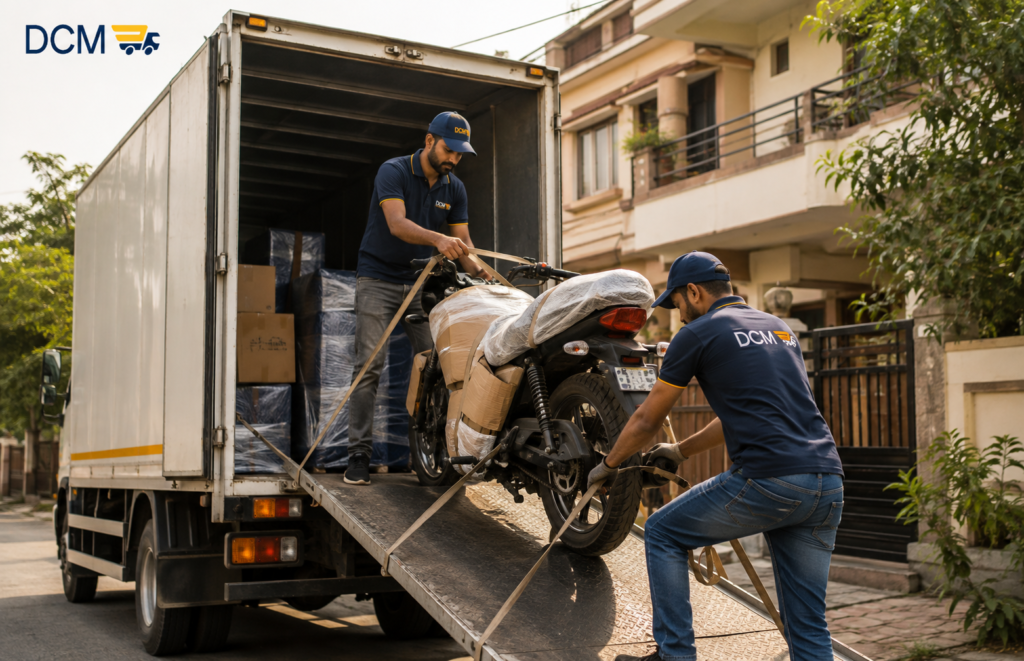
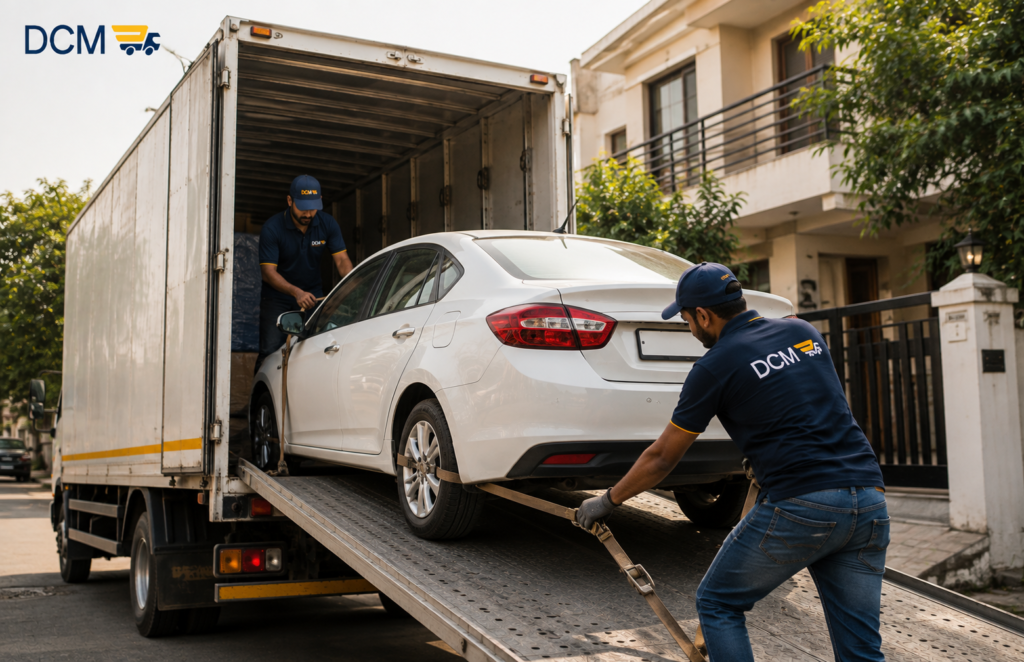
Packing and securing. Bikes are usually wrapped and strapped upright or on a stand inside the truck to prevent movement. Cars are driven onto the carrier and locked in place with wheel clamps and ratchet straps so nothing wobbles during transit.
Transit and tracking. Many companies now offer real-time tracking or regular status updates, so you are not left guessing whether your vehicle is stuck at a highway dhaba or actually on the move.
Delivery and handover. At the destination, the vehicle is inspected again against the original condition report, and unloaded carefully. You sign off only after confirming everything matches.
Open Carrier or Enclosed Carrier: What Should You Pick?
This is where most first-time customers get confused, so let us keep it simple.
An open carrier is the flatbed trailer you often see on highways, stacked with cars. It is the most common and the most affordable option, though the vehicle is exposed to dust, weather, and road debris during the journey.
An enclosed carrier is a closed container, which shields the vehicle completely. It costs more but suits premium cars, vintage vehicles, or bikes owners who simply do not want a speck of dust on their prized possession.
For an everyday hatchback or a regular commuter bike, an open carrier usually does the job fine. For luxury cars or collector bikes, spending extra on an enclosed carrier is a fair trade-off for peace of mind.
The Paperwork Nobody Talks About: RTO Rules and NOC
Here is the part that catches people off guard. Moving your vehicle physically is only half the job. The Motor Vehicles Act, 1988 also expects you to sort out the paperwork if you are relocating permanently.
Under Section 47 of the Act, a vehicle that stays in a new state for more than 12 months must be re-registered there. Before that can happen, you need a No Objection Certificate, or NOC, from the RTO where the vehicle was originally registered.
The NOC is applied for using Form 28, and it confirms there are no pending challans, taxes, or loan liabilities against the vehicle. Once issued, the NOC typically stays valid for six months, giving you enough time to complete the re-registration process at the new RTO.
There is some good news on the horizon too. A government committee has reportedly recommended replacing the manual NOC process with an auto-generated digital clearance, using the existing VAHAN database, which could make interstate transfers noticeably simpler in the future. Until that becomes standard practice, though, it is best to sort your NOC before your vehicle even leaves the old city.
A reliable mover will usually guide you through this paperwork or at least tell you clearly what you need to arrange yourself. That is a good sign of a company that treats you as a customer, not just a booking number.
Insurance: Do Not Skip This Step
Ask your transportation provider whether your vehicle is covered under a goods-in-transit insurance policy during the move. Accidents on highways are rare but not impossible, and a small dent from a badly loaded carrier is a bigger headache without insurance backing.
Also keep your own motor insurance active and unlapsed during the move. An NOC application typically requires proof of a valid policy, so this is not something to postpone.
What Makes DCM Packers and Movers a Trusted Choice
DCM Packers and Movers has been operating for over 34 years, which in the relocation business counts as genuine staying power rather than a marketing line. The company runs 80-plus branches across India, covering more than 1,264 service locations, from metro cities to smaller towns in Punjab, Haryana, and Himachal Pradesh.
Their transportation services cover car carriers and bike shifting alongside household and office relocation, so customers moving an entire home do not need to juggle separate vendors for the vehicle. Vehicles are handled by trained staff using proper wheel stands and securing equipment, reducing the risk of transit damage.
Being based out of Chandigarh gives DCM a strong footing across North India, while their pan-India branch network supports longer, cross-country shifts as well. For anyone comparing car and bike movers, a company with this kind of geographic spread and track record is worth shortlisting.
Checklist Before You Hand Over Your Vehicle
A few basic checks can save you from disputes later.
- Take clear photos of the vehicle from all angles before pickup.
- Note the odometer reading and fuel level in writing.
- Confirm whether insurance for the transit is included or needs to be purchased separately.
- Ask for a written estimate that mentions the type of carrier, expected delivery window, and total charges.
- Keep your RC, insurance copy, and NOC (if applicable) handy for both pickup and delivery.
None of this takes more than fifteen minutes, and it puts you in a much stronger position if anything needs to be questioned later.
What Affects the Cost of Vehicle Transportation
Pricing for car and bike transport depends on a mix of factors rather than a flat rate.
Distance is the biggest driver, since longer routes mean more fuel and time. The type of carrier matters too, with enclosed transport costing more than open transport. Vehicle size and weight also play a role, as an SUV naturally takes up more carrier space than a hatchback or a scooter.
Seasonal demand can nudge prices as well, particularly around the festive relocation season when moving companies get busier. It is always worth comparing quotes from two or three trusted providers before finalising, rather than going with the first number you hear.
Frequently Asked Questions
Is it necessary to get an NOC before moving my vehicle to another state?
Yes, if you plan to stay in the new state beyond 12 months, an NOC from your original RTO is required for re-registration under the Motor Vehicles Act, 1988.
How long does interstate car or bike transportation usually take?
It depends on the distance, but most intercity moves across India are completed within a few days to about a week.
Is my vehicle insured during transit?
Reputable transportation companies offer goods-in-transit insurance. Always confirm this before booking and keep your personal motor insurance active as well.
Frequently Asked Questions
Is it necessary to get an NOC before moving my vehicle to another state?
Yes, if you plan to stay in the new state beyond 12 months, an NOC from your original RTO is required for re-registration under the Motor Vehicles Act, 1988.
How long does interstate car or bike transportation usually take?
It depends on the distance, but most intercity moves across India are completed within a few days to about a week.
Is my vehicle insured during transit?
Reputable transportation companies offer goods-in-transit insurance. Always confirm this before booking and keep your personal motor insurance active as well.
Can I transport a bike without a wooden crate?
Yes, many companies use padded straps and upright stands instead of wooden crating, which is often just as safe and more cost-effective.
Final Word
Moving a car or bike does not have to be stressful once you understand the process. Book with a transportation service that has real experience, ask direct questions about carrier type and insurance, and keep your paperwork ready before pickup day arrives.
With decades of experience and a wide branch network across India, DCM Packers and Movers offers a dependable option for anyone who wants their vehicle to reach the new address in the same condition it left the old one.

Contact Info
- Dcm Packers Movers
- +91 9779593495
- +91 8005573532
- dcmpackermover@gmail.com
- Shop No, 2254/H, 2nd Floor, Pipliwala Town, Near Fouji Dhaba, Manimajra, Chandigarh - 160101